
Carhartt Jacket Resale Value Guide: Vintage vs Modern, Tags, and What Sells
Carhartt Jacket Resale Value Guide
Carhartt jacket resale value varies significantly depending on age, model, condition, and tag era. While modern Carhartt workwear sells consistently, vintage USA-made jackets often command substantially higher resale prices due to durability, fading patterns, and streetwear crossover demand.
Understanding the difference between vintage and modern production is critical for accurate pricing.
Why Carhartt Jackets Hold Resale Value
Carhartt jackets perform well in resale because they combine:
Heavy-duty construction
Distinctive canvas (duck) fabric
Long lifespan
Recognizable workwear aesthetic
Cross-market demand (workers + fashion buyers)
Unlike trend-based fashion brands, Carhartt jackets gain character through wear. Fading, distressing, and patina can increase appeal — when balanced against structural integrity.
Vintage vs Modern Carhartt Jackets
Vintage Carhartt (1980s–Early 2000s)
Most desirable features:
Made in USA tag
Thick heavyweight duck canvas
Blanket or quilt lining
Distinct fade patterns
Traditional square logo patch
Common vintage models:
Detroit Jacket (J97, J01)
Active Jacket (J130)
Traditional Coat
Resale range:
$100–$350+
Rare colorways or heavy fade can exceed this
Vintage Carhartt has strong streetwear demand, especially Detroit Jackets.
Modern Carhartt (Post-2000s)
Modern Carhartt is often:
Made in Mexico, Nicaragua, or elsewhere
Slightly lighter-weight in some models
Still durable but mass-produced
Resale range:
$40–$120 depending on condition
Modern jackets sell reliably but rarely command vintage premiums unless near-new.
The Detroit Jacket: The Strongest Performer
The Carhartt Detroit Jacket is the most sought-after resale model.
Why:
Clean silhouette
Recognizable shape
Strong fashion crossover
Compact fit compared to bulkier coats
Vintage Detroit jackets in good structural condition often outperform other Carhartt pieces.
Tag History and What to Look For
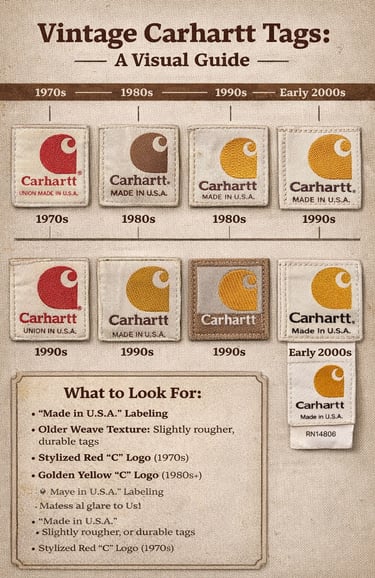
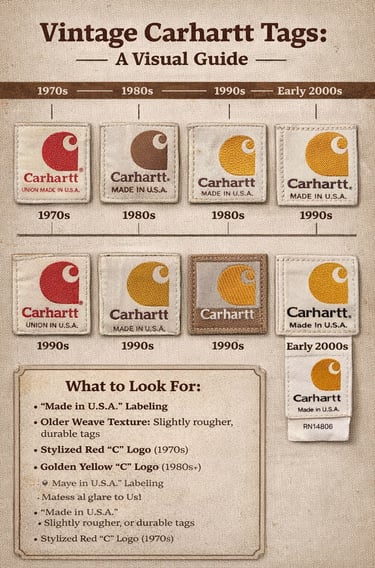
Carhartt tags help identify era and production origin.
Vintage Indicators
“Made in U.S.A.” clearly printed
Older woven tags
Care tags with older formatting
Model codes like J97, J01
These typically increase resale value.
Modern Tags
Global manufacturing listed
Updated font styling
Larger interior branding labels
Modern tags do not automatically reduce value, but they remove vintage premium.
Condition and Patina: Unique to Carhartt
Unlike many brands, Carhartt jackets can benefit from controlled wear.
Positive wear:
Natural fade
Light distressing
Broken-in canvas
Negative condition issues:
Structural tears
Broken zippers
Excessive oil staining
Torn lining
Buyers distinguish between “worn” and “damaged.”
For broader context:
Common Carhartt Resale Mistakes
Overpricing Modern Jackets
Modern Carhartt jackets are widely available. Production volume increased significantly in the 2000s and beyond, and most current pieces are mass-produced for steady retail distribution.
Beginner sellers often make this mistake:
They see a vintage Detroit selling for $220
They list a modern Detroit for $200
But modern jackets lack:
USA-made premium
Vintage patina appeal
Limited production perception
Streetwear scarcity factor
Even if the silhouette is similar, buyers pay for era and authenticity, not just shape.
Modern Carhartt resale pricing should be grounded in:
Recent sold comps
Condition
Model-specific demand
Most modern jackets in good used condition realistically trade in the $60–$120 range unless nearly new or in a highly sought-after color.
Undervaluing Vintage USA Jackets
The opposite mistake is underpricing older USA-made Carhartt.
Vintage Detroit (J97, J01) and Active Jackets made in USA often command significant premiums because:
They were produced in smaller volumes
Construction is heavier
Canvas is denser
Fade patterns develop uniquely
They carry fashion resale demand
Streetwear buyers actively seek:
Heavy fade
Distressed but structurally sound pieces
Classic brown or rare colorways
Blanket-lined interiors
A worn but structurally intact vintage USA Detroit jacket can easily outperform a clean modern one.
Before pricing low, check:
Interior tag for Made in USA
Model code
Recent sold comps for that exact model
Vintage Carhartt is currently driven by both workwear durability and fashion demand — and that crossover increases pricing ceilings.
Ignoring Model Code
Carhartt model numbers matter more than many beginners realize.
Examples:
J97 = Detroit Jacket (blanket-lined)
J01 = Earlier Detroit
J130 = Active Jacket
C26 = Traditional Coat
Different models have:
Different fits
Different demand levels
Different resale ceilings
A generic listing titled “Carhartt Jacket” leaves money on the table.
Buyers search by model code.
Including the model:
Improves search visibility
Attracts knowledgeable buyers
Supports stronger pricing
If the model code is unclear, check interior tags or care labels. It often appears printed near the RN or manufacturing information.
Confusing Workwear Demand With Streetwear Demand
Carhartt has two buyer bases:
Functional buyers (job-site use)
Fashion buyers (streetwear / vintage aesthetic)
These buyers value different traits.
Workwear Buyers Prioritize:
Structural integrity
Clean condition
Functional zippers
Insulation
Durability
Streetwear Buyers Prioritize:
Patina
Fading
Distressed aesthetic
Boxy fit
Vintage tags
A heavily faded Detroit jacket may sell better to a fashion buyer than a nearly new one.
Conversely, oil stains or torn lining can reduce appeal across both segments.
Understanding which buyer segment you’re targeting affects pricing decisions.
Typical Carhartt Jacket Resale Ranges (Expanded)
These are general benchmarks based on consistent resale behavior. Always verify with current sold comps.
Modern work jacket $40–$100 Mass production, pricing heavily condition-dependent
Modern Detroit $70–$150 Higher if near-new or desirable color
Vintage USA Detroit $150–$350+ Strong streetwear demand, heavy fade can increase value
Vintage blanket-lined coat $120–$300 Depends on size and structural integrity
Premium Scenarios
Prices may exceed these ranges when:
Colorway is rare (moss green, deep navy, certain seasonal runs)
Fade is aesthetically strong but fabric is intact
Jacket is large/XL in desirable proportions
Demand cycle favors workwear trends
Rare, excellent-condition vintage Detroit jackets can push well beyond the standard range.
Quick Evaluation Checklist (Expanded)
Before buying or listing a Carhartt jacket, run through this structured evaluation:
1. Check Interior Tag
Does it say Made in USA?
What era is indicated?
Is there a visible model code?
USA production typically increases resale ceiling.
2. Identify Model Code
Model codes influence both demand and pricing.
Confirm whether it is:
Detroit
Active Jacket
Traditional Coat
Santa Fe style
Other specific cut
Never price blindly without model identification.
3. Inspect Zipper Functionality
Broken zippers significantly reduce resale value.
Buyers expect:
Smooth closure
No separation
Functional pulls
Zipper repairs reduce profit margin.
4. Check Lining Integrity
Look for:
Torn blanket lining
Heavy interior wear
Separated seams
Exterior fade can add value — interior damage reduces it.
5. Evaluate Fade vs Damage
Ask:
Is the fading uniform and aesthetic?
Are there structural holes?
Is distressing intentional-looking or excessive?
Controlled wear = potential premium
Structural damage = discount
6. Review Recent Sold Comps
Search by:
Model code
Size
Condition
Made in USA filter if applicable
Ignore high active listings. Focus on consistent sold range.
If model identification is uncertain from tag or cut, image-based pricing tools can help narrow the likely resale bracket.
ResalePriceGuide.com is operated by the team behind Flip411
Contact
© 2026. All rights reserved.
ResalePriceGuide.com provides independent resale market analysis. Brand names, trademarks, and logos are the property of their respective owners and are used for identification purposes only.